

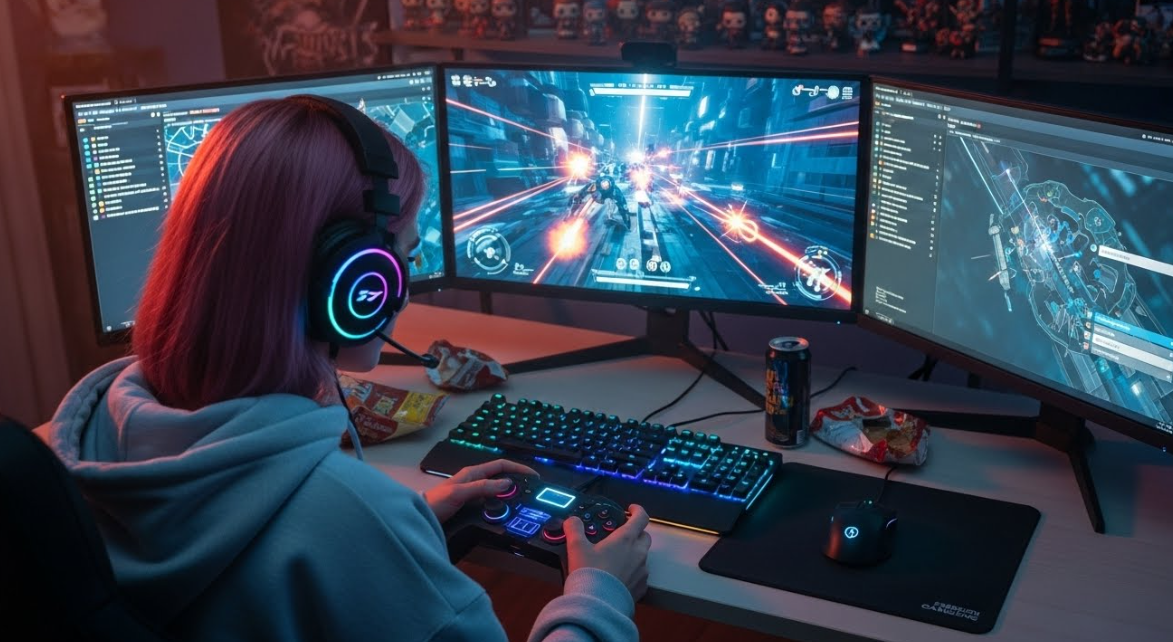
Online slot bet 50 has transformed the entertainment industry by allowing people to interact through digital worlds in real time. Players can compete against opponents, cooperate with friends, communicate with communities, and explore constantly changing environments from almost anywhere. With improvements in internet connectivity and gaming technology, online gaming has become accessible to a much broader audience.
The industry now includes mobile games, multiplayer platforms, esports, streaming, virtual communities, and digital marketplaces. This expansion has made gaming an important part of modern digital culture and created opportunities for both players and businesses.
The Origins of Online Gaming
The concept of connecting players through games developed alongside early computer networks. Initial multiplayer experiences were relatively simple and could only support a limited number of participants.
As internet connections became faster, developers began experimenting with larger online environments.
Multiplayer features gradually became more sophisticated, eventually allowing users to interact in real time across long distances.
These technological developments created the foundation for today’s online gaming industry.
How Online Gaming Has Changed
Modern online games are very different from early multiplayer titles. Today’s games can feature realistic graphics, massive maps, complex economies, voice communication, and thousands of active users.
Developers can also update games continuously. New content, seasonal events, balance changes, and technical improvements can be delivered directly to players.
This model keeps games active and allows communities to influence how titles develop over time.
The Attraction of Multiplayer Games
One of the main reasons people enjoy online games is the opportunity to interact with real players. Human opponents can behave unpredictably, making each match different.
Players can also develop their abilities through practice. Ranking systems and competitive modes provide measurable goals, while cooperative modes allow users to work toward shared achievements.
These elements create experiences that can remain engaging for long periods.
Online Games as Social Platforms
Gaming is no longer purely about gameplay. Many online games function as social platforms where people communicate and spend time together.
Friends can use voice chat while completing missions or competing in matches. Communities can also organize tournaments, discussions, and events.
For players who live far apart, online gaming can provide an easy way to stay connected.
Major Categories of Online Gaming
The industry offers a wide range of genres.
Competitive Action Games
These games focus on quick reactions, accuracy, movement, and tactical decisions. Players often compete individually or as teams.
Massively Multiplayer Games
These games provide large persistent worlds where users can interact with many other players while developing characters and completing objectives.
Strategy Games
Strategy titles require planning, resource management, and careful decision-making. Players often need to think several moves ahead.
Sports and Racing Games
These games recreate real-world sports and racing competitions, allowing users to compete against other players online.
Adventure and Survival Games
These experiences often combine exploration with resource management, combat, crafting, and cooperation.
Online Gaming and Competition
Competition is one of the strongest motivations for online players. Many games use ranking systems that allow users to compare their performance with others.
Players may practice specific skills, study strategies, and analyze previous matches to improve.
Competitive gaming can also teach players to deal with failure. Losing a match can provide useful information about weaknesses and areas that need improvement.
The Rise of Esports
The competitive side of online gaming has developed into esports. Professional players compete in structured tournaments and leagues.
Esports events attract audiences through streaming platforms and live venues. Teams often include coaches and analysts who help players prepare for competitions.
The industry has created career opportunities not only for players but also for commentators, event organizers, content creators, and production specialists.
Gaming and Livestreaming
Streaming has changed how people consume gaming content. Instead of playing a game themselves, viewers can watch others play while participating in live discussions.
Streamers can build large audiences through competitive skills, entertainment, humor, or educational content.
This has created a new relationship between game developers, players, and audiences.
The Impact of Smartphones
Mobile devices have made online gaming easier to access. Smartphones are widely available and can support multiplayer games without the need for a dedicated gaming machine.
Many mobile games are designed around convenient sessions, allowing users to play for a few minutes or several hours.
As mobile processors and internet networks improve, the quality and complexity of mobile gaming continue to increase.
Free-to-Play Gaming
Free-to-play models have become common in the online gaming market. Players can usually access the main game without paying an initial purchase price.
Developers may generate revenue through optional digital items, cosmetic upgrades, subscriptions, seasonal passes, or additional content.
This approach can help games attract large audiences, but users should remain aware of their spending.
The Positive Side of Gaming
Online gaming can provide entertainment and opportunities for social interaction. Some games require players to analyze information, solve problems, manage resources, and make quick decisions.
Multiplayer games may also encourage teamwork and communication.
For many people, gaming is simply a way to relax after work or spend enjoyable time with friends.
Problems Caused by Excessive Gaming
Although gaming can be enjoyable, excessive use may create difficulties. Spending too much time online can affect sleep, exercise, education, work, and relationships.
Players may also encounter negative behavior such as harassment, cheating, or scams.
Developing healthy gaming habits and using safety features can help reduce these problems.
Online Safety for Gamers
Protecting personal information is essential in online gaming. Players should use strong passwords and enable two-factor authentication when possible.
They should also avoid sharing sensitive information with strangers. Suspicious messages, fake rewards, and links requesting login details should be treated with caution.
Parents can help younger players by discussing privacy, communication, and spending rules.
The Business of Online Gaming
Online gaming has developed into a large economic industry. Game development requires programmers, designers, artists, writers, sound engineers, testers, and managers.
Other parts of the industry include hardware manufacturers, esports organizations, advertising companies, streaming platforms, and content creators.
The growth of online gaming continues to create new career and business opportunities.
Artificial Intelligence in Gaming
Artificial intelligence is expected to influence online games significantly. AI can help create more responsive characters, dynamic environments, and personalized experiences.
Developers may also use AI to improve testing and create new types of content.
As the technology develops, games could become more adaptive and capable of responding to individual players.
Cloud Gaming and Immersive Experiences
Cloud gaming allows some games to run on remote servers rather than entirely on the user’s device. This could make high-quality gaming accessible to people with less powerful hardware.
Virtual reality and augmented reality could also transform multiplayer gaming by creating more immersive environments.
These technologies may allow players to feel more physically connected to digital worlds.
Maintaining a Healthy Relationship With Gaming
Responsible gaming requires balance. Players should maintain healthy sleeping habits, exercise regularly, and make time for responsibilities and offline activities.
Taking breaks during long sessions can improve comfort and reduce fatigue. Players should also establish reasonable budgets for digital purchases.
A balanced routine ensures that gaming remains enjoyable rather than disruptive.
The Future of Online Communities
Online gaming communities are likely to become even more connected in the future. Cross-platform systems may allow more players to participate together regardless of the device they use.
Improved communication tools and social features could make games function increasingly like digital meeting spaces.
This could further strengthen the relationship between gaming and online social interaction.
Conclusion
Online slot jackpot has become a major part of modern entertainment by combining technology, competition, creativity, and social interaction. Its growth has created new forms of entertainment such as esports and livestreaming while also supporting a large global business ecosystem.
Future developments in artificial intelligence, cloud computing, mobile technology, and virtual reality will continue to reshape the industry.
When enjoyed responsibly, online gaming can offer challenging experiences, social connections, and countless hours of entertainment. Its ability to bring people together through shared digital experiences ensures that it will remain an important part of the modern entertainment landscape.
